
Introduction
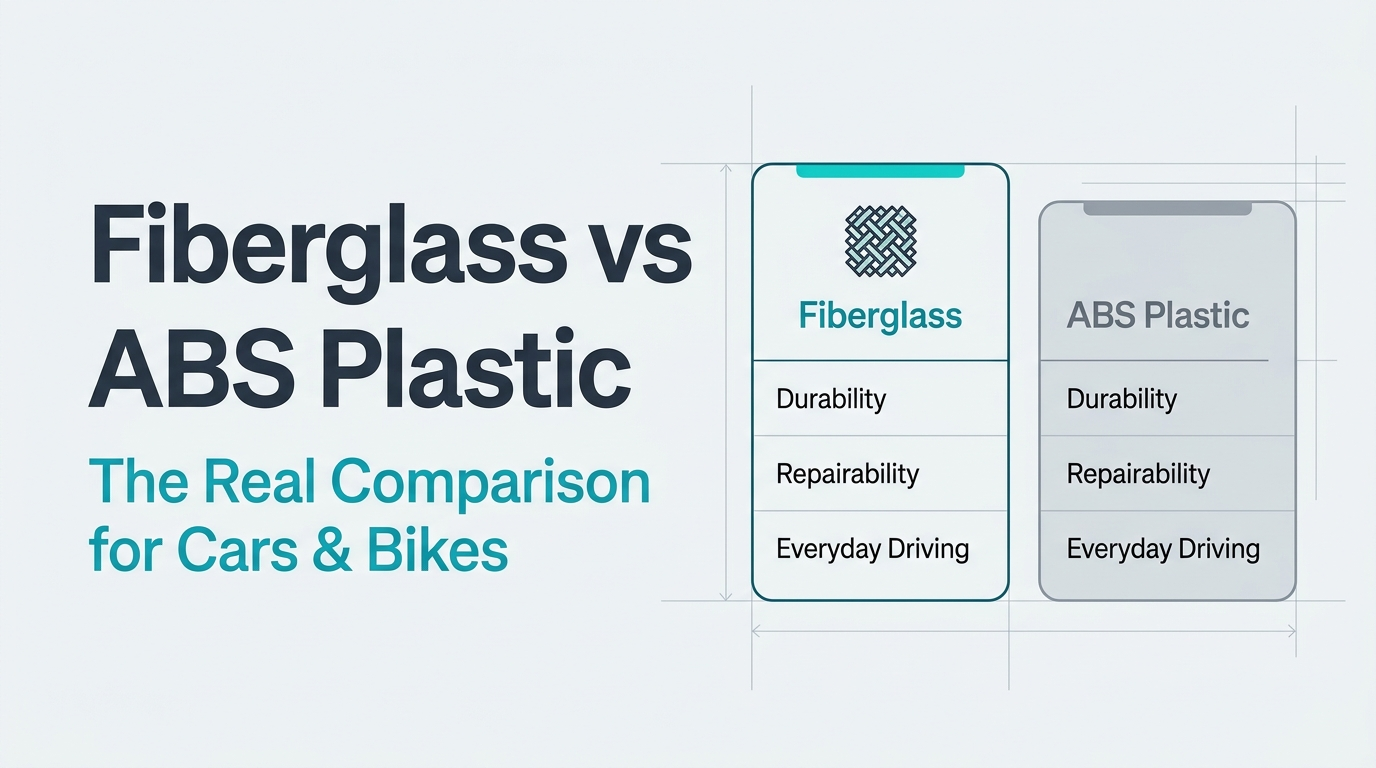
Whether you are modifying a project car or restoring a motorcycle, you eventually reach the same crossroad when choosing exterior body parts: Fiberglass (FRP) or ABS Plastic.
For car enthusiasts, it is usually a decision about front lips, side skirts, widebody fenders, or rear diffusers. For motorcycle riders, it comes down to fairings, headlight masks, front mudguards, and tail cowls.
Internet debates often oversimplify this choice. Some claim ABS is always better because factory cars use it, while others argue high-grade fiberglass is the gold standard for custom and performance builds.
The reality is that both materials have distinct mechanical characteristics. How they perform depends entirely on impact resistance, structural rigidity, road vibrations, and how easily they can be repaired when damaged.
Here is a straightforward, real-world comparison to help you choose the right material for your car or motorcycle.
. Structural Strength: Rigidity vs Impact Behavior
The fundamental difference between fiberglass and ABS plastic lies in how each material is made.
ABS Plastic: Flexible Under Light Pressure, Brittle Under Hard Impact
ABS (Acrylonitrile Butadiene Styrene) is an injection-molded thermoplastic. It is formed by melting plastic pellets and injecting them into steel molds under high pressure.
- In Cars: A standard ABS front lip or bumper has some natural flexibility. A minor low-speed bump into a curb can flex and spring back into shape without cracking.
- In Bikes: ABS motorcycle panels are lightweight and uniform when fresh from the factory.
- The Weakness: While ABS tolerates gentle bending, it has a clear breaking point. When a lowered car bottoms out heavily on a steep driveway ramp, or when road debris hits at highway speed, ABS does not bend—it shears or cracks clean through. Because it is a solid sheet of molded plastic, stress cracks easily travel across the entire panel or snap mounting tabs off completely.
♦ Fiberglass (FRP): Woven Tensile Strength & Aerodynamic Stiffness
Fiberglass is not melted plastic; it is a composite material. It consists of multi-directional woven glass cloth bonded with a cured polymer resin matrix.
- In Cars: Because fiberglass is rigid, it excels at holding aerodynamic shapes. Front splitters, bumper extensions, and rear diffusers maintain their exact profile at highway speeds without fluttering, bowing downward, or vibrating under heavy downforce.
- In Bikes: Headlight cowls, front mudguards, and fairings built from quality fiberglass do not flex back into the tire or wobble in high-speed headwinds.
- The Structural Advantage: The interwoven fibers distribute impact energy across the entire component rather than concentrating stress into a single failure point. While an extreme blow can cause a crack or graze the outer surface, the underlying woven structure holds together instead of shattering into pieces.
. Daily Road Driving: Speed Bumps, Driveways & Debris
Any vehicle driven regularly will eventually encounter harsh road conditions: steep ramps, high speed bumps, gravel, and engine vibration.
For Cars: Front Lips & Side Skirts
- The Clearance Challenge: Lowered vehicles, sporty suspensions, and aftermarket body kits naturally reduce ground clearance. Every driver occasionally scrapes a steep parking entrance or an aggressive speed breaker.
- ABS Behavior: When an ABS splitter bottoms out hard against pavement, the bottom edge can grind down, or the mounting points can tear out from the bumper. Once the mounting tab snaps, re-hanging the part securely becomes difficult.
- Fiberglass Behavior: High-density fiberglass handles direct road scrapes with high resistance. Even when ground along the bottom edge on a steep incline, the composite maintains its structural mounting points.
♦ For Bikes: Fairings, Fenders & Vibration
- Motorcycle Stress: Single-cylinder and twin-cylinder motorcycle engines produce continuous high-frequency vibrations. At the same time, front fenders must endure stone chips kicked up by the front tire.
- ABS Behavior: Over time, continuous engine vibration causes older or thinner ABS plastics to develop micro-cracks around mounting bolt holes and fairing brackets.
- Fiberglass Behavior: The continuous fibrous weave of composite materials naturally absorbs and dampens mechanical vibrations. Mounting holes reinforced with composite layers stay tight without wallowing out or developing spider cracks around the hardware.
. The Deciding Factor: The Repairability Truth
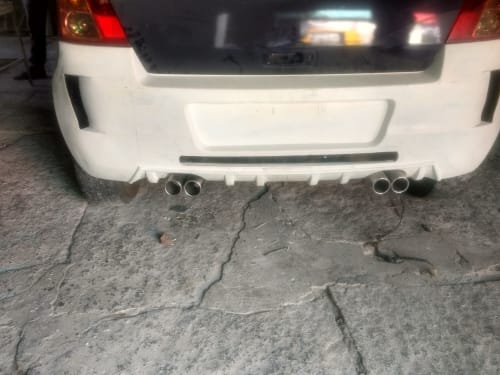
This is the single most important distinction every vehicle owner must consider. On daily driven cars and bikes, exterior parts will get damaged sooner or later.
What happens after that damage occurs determines the real cost of ownership.
Damaged ABS Plastic: Usually Disposable
When an ABS car splitter or motorcycle fairing cracks or snaps:
- Glues & Epoxies Do Not Last: Standard household adhesives, super glues, and quick-set epoxies cannot create a lasting molecular bond with smooth ABS plastic. Under road vibrations and chassis flex, glued seams inevitably break again.
- Plastic Welding Has Limits: While specialized shops can attempt plastic welding using hot irons or melted plastic rods, the repaired seam remains a structural weak point. A second scrape at the same spot almost always re-opens the fracture.
- The Reality: In most cases, a badly cracked ABS body kit or broken motorcycle cowl must be thrown away and replaced with a completely new part.
♦ Damaged Fiberglass: 100% Restorable to Full Strength
When a fiberglass panel, bumper skirt, or bike mudguard gets cracked or scraped:
- True Structural Re-bonding: Because fiberglass is built in layers, damaged areas can be permanently bonded from behind using fresh composite cloth and resin. The new material fuses directly into the existing structure.
- Restored Structural Integrity: Once cured, the repaired section matches the strength of the original part. It does not remain a weak point.
- Seamless Exterior Finish: The outside surface is skimmed smooth, sanded flush, primed, and repainted. The repair is completely invisible, and the part returns to service.
- The Reality: Fiberglass is a renewable material. You can repair, reinforce, and repaint the same part multiple times over years of ownership, eliminating the need to repeatedly buy replacement panels.
. Temperature Resistance & Long-Term Weathering
Exterior automotive parts face blistering midday sun, sudden rain, and freezing temperatures.
- Thermal Stability: Fiberglass is a thermoset material. Once the resin cures, it is chemically locked. It will not soften, warp, or sag when exposed to direct summer heat or radiant engine bay temperatures.
- UV & Age Degradation: Lower-tier aftermarket ABS plastics can degrade and become brittle when exposed to prolonged sunlight over multiple seasons. Quality fiberglass, protected beneath a UV-blocking automotive clear coat or paint system, maintains its structural flexibility and strength for decades.
. Head-to-Head Comparison: Cars & Motorcycles
| Criteria | Handcrafted Fiberglass (FRP) | Aftermarket ABS Plastic |
|---|---|---|
| High-Speed Rigidity | High (Zero flutter on car splitters & bike cowls) | Moderate (Thin splitters can sag or flex under wind) |
| Vibration Resistance | High (Fiber weave dampens engine vibration) | Moderate (Mounting holes can crack over time) |
| Impact Characteristic | Disperses stress across weave; localized cracking | Light flex, but shears or snaps under heavy load |
| Repairability | 100% Restorable (Re-laminate from behind & repaint) | Very Poor (Glues fail; usually requires replacement) |
| Heat & Sun Resistance | Excellent (Thermoset composite; zero heat warpage) | Moderate (Thin plastics can warp under extreme heat) |
| Custom Fitment & Modding | Easy to trim, reshape, or modify to fit custom setups | Difficult to alter without specialized heat tools |
| Ideal Vehicle Use | Custom body kits, splitters, skirts, vintage restorations | Mass-produced factory replacement bumpers |
. Which Material Should You Choose?
Both materials have their place in automotive and motorcycle builds. Here is how to decide based on your specific project:
Choose ABS Plastic When:
- You are replacing a completely stock factory bumper on an everyday commuter car at original ride height.
- You are purchasing a genuine OEM-manufactured motorcycle panel directly from the brand’s authorized parts counter.
- You do not intend to track the vehicle, lower the suspension, or drive in environments where heavy scrapes are likely.
♦ Choose Handcrafted Fiberglass When:
- For Cars: You are adding front splitters, bumper lips, side skirts, rear diffusers, or wide fenders that sit closer to the ground and need both aerodynamic stiffness and easy repairability after scrapes.
- For Motorcycles: You are replacing front mudguards, headlight masks, side panels, or racing fairings that need to withstand relentless engine vibration, gravel impacts, and trail use.
- For Restorations: You are rebuilding a classic car or vintage motorcycle where original factory plastics are completely discontinued and out of production.
- For Custom Builds: You need parts that can be hand-trimmed, molded, or customized to match custom wheel offsets, lowered stances, or one-off styling.
The Bottom Line
ABS plastic is built for high-volume mass production. When it stays at stock height and escapes hard impacts, it performs reliably.
However, for enthusiasts who lower their cars, ride hard on motorcycles, or demand parts that can survive road scrapes and be repaired without buying new every time, handcrafted reinforced fiberglass provides unmatched durability, structural stiffness, and long-term value.
Looking for Custom Panels or Restoration Parts?
Whether you need aerodynamic styling upgrades for your car or durable replacement bodywork for your motorcycle, our workshop specializes in precision-crafted composite components built for real-world driving.
- 🌐 Explore the Catalog: Classic Fiber Official Store
- 💬 Workshop Inquiries & Orders: Connect with our fabrication team directly on WhatsApp for fitment advice, custom projects, and secure shipping.